
The job market is flooded with lists claiming to have found the 'best' places to work. But what does 'best' truly mean for you? Is it about compensation, work-life balance, career mobility, or an innovative culture? The answer varies for every software engineer, product manager, and designer. Instead of presenting another subjective ranking, this guide provides a curated roundup of the most reliable, data-driven platforms that will help you identify the best tech companies to work for based on your personal priorities.
This isn't just a list; it's a practical toolkit for a smarter, more targeted job search in 2025. We'll break down the methodology behind each platform, what they excel at, and how you can use them to find actionable opportunities, especially at the high-growth startups and tech firms in hubs like NYC, SF, and remote-first environments that Underdog.io specializes in. Each entry includes screenshots and direct links to help you navigate these resources efficiently.
We'll dissect seven key platforms, from broad employee review sites like Glassdoor to compensation-focused tools like Levels.fyi. By understanding the unique angle each one offers, you can build a comprehensive picture of a company's true nature. Beyond general rankings and review sites, looking at specific attributes like transparency can also reveal truly exceptional workplaces. Consider exploring this list of the Top 10 Most Transparent Companies Globally in 2024 to see how openness can signal a healthy culture. This guide will equip you to cut through the noise and find a role that aligns with your specific career goals and values.
When starting your search for the best tech companies to work for, Glassdoor is the essential first stop. Its power comes from a simple premise: current and former employees provide anonymous, unfiltered reviews about their workplace experiences. This crowdsourced model makes it an invaluable resource for looking past a company's polished career page and understanding its true, day-to-day reality.
The platform’s annual "Best Places to Work" awards are a cornerstone feature, driven entirely by employee feedback rather than editorial selection. This provides an authentic, data-backed starting point for your research. Beyond the rankings, every company profile is a deep well of information, allowing you to gauge sentiment on everything from leadership effectiveness and work-life balance to compensation and benefits.

Glassdoor excels at providing a multi-faceted view of a potential employer. Its most powerful features include:
Actionable Tip: Don't just look at the overall star rating. Filter reviews by job title (e.g., "Software Engineer") and sort by "Most Recent" to understand the current sentiment within the engineering department specifically. A recent review might say, "Great company, but the recent re-org has made the data science team chaotic," which is a critical insight you wouldn't get from the aggregate score.
To access the full depth of reviews and salary data, Glassdoor requires you to create a free account and contribute anonymously by leaving a review of your own or providing salary information. While some users note that self-reported data can have biases, the sheer volume of reviews for most major tech companies helps balance out individual outliers. Its strong U.S. focus ensures the data for hubs like San Francisco and New York is constantly refreshed, making it a reliable tool for tracking a company's reputation over time.
While Glassdoor offers a wide-angle, crowdsourced view, Great Place To Work (GPTW) provides a more structured, data-driven perspective on what makes a company one of the best. As the analytics partner for Fortune's renowned "Best Workplaces" lists, GPTW uses its rigorous Trust Index employee survey to measure culture on a massive scale. This methodology provides a credible, research-backed alternative for identifying top employers.
The platform is best known for its annual "Fortune Best Workplaces in Technology" list, which is an excellent resource for anyone looking specifically within the tech sector. Unlike purely subjective reviews, this ranking is based on confidential employee feedback about trust, respect, fairness, and camaraderie. It offers a powerful signal that a company is not just talking about great culture, but actively building it.
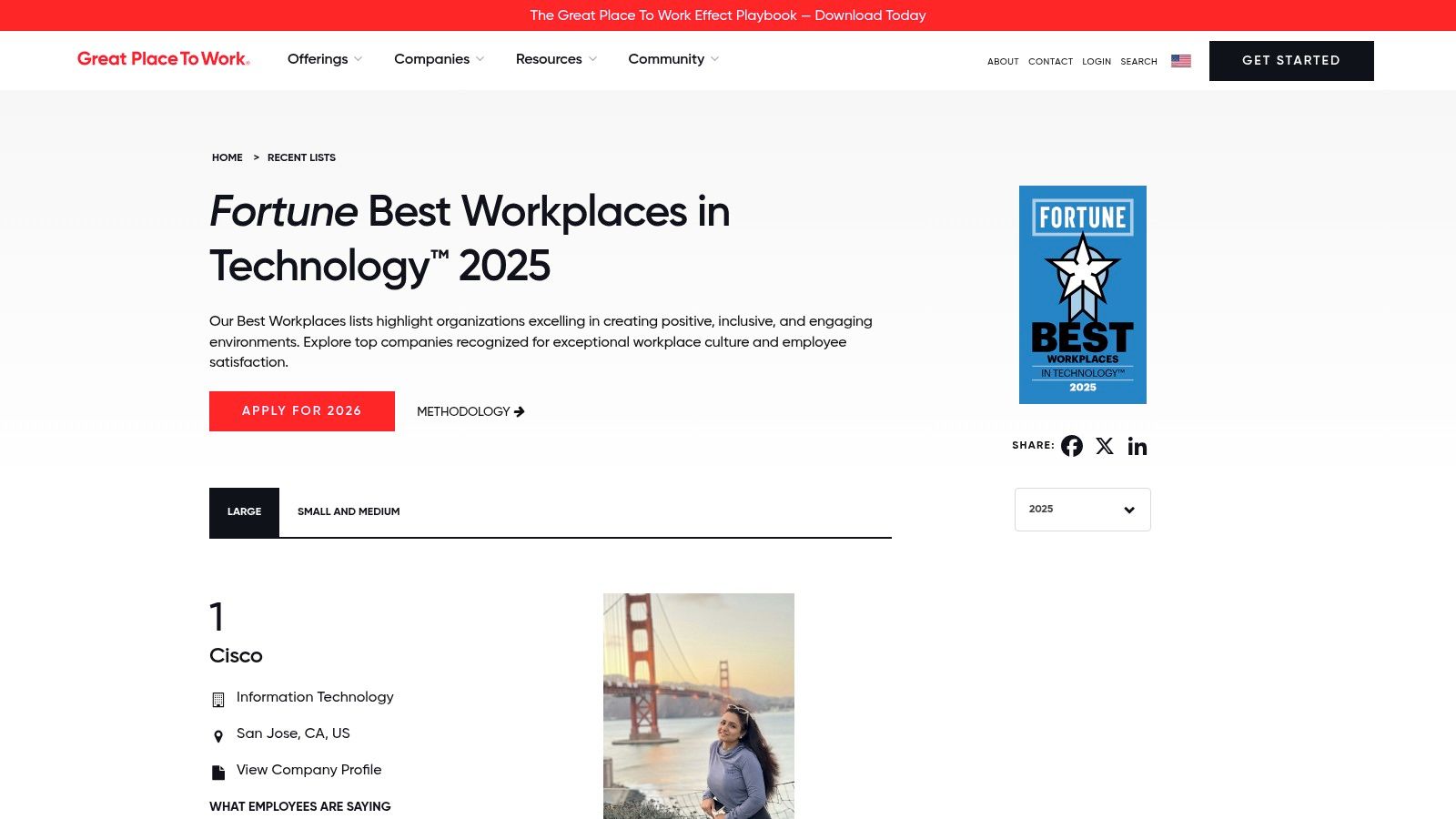
Great Place To Work excels at validating a company’s claims about its culture through standardized, confidential employee feedback. Its most valuable features for job seekers include:
Actionable Tip: Use the Small and Medium Business (SMB) list to uncover hidden gems. Many fast-growing startups in hubs like NYC and SF appear here long before they become household names. For a practical application, screen this list for companies in your desired sector (e.g., FinTech, HealthTech), then research their recent funding rounds on Crunchbase to gauge their growth trajectory and stability.
The public-facing lists and company profiles are completely free to access and browse. While GPTW’s deeper analytics and benchmarking reports are paid services for employers seeking certification, the rankings themselves serve as a powerful free research tool for job seekers. Because the rankings are based on direct employee surveys, they offer a strong counterpoint to the more anecdotal reviews found elsewhere. This data-first approach is invaluable for vetting a startup’s culture before you invest time in the application process. The platform's strong U.S. focus ensures the data is highly relevant for top tech markets.
For those looking to identify companies with a proven track record of exceptional workplace culture, the Fortune 100 Best Companies to Work For list is a prestigious and authoritative resource. Produced in partnership with Great Place to Work (GPTW), this annual ranking isn't limited to tech but frequently features industry leaders, making it an excellent tool for discovering the best tech companies to work for that are celebrated for their employee-first approach.
The list’s power comes from its rigorous, data-driven methodology, which relies heavily on confidential employee surveys. This ensures that the companies highlighted are recognized for genuine employee satisfaction, not just public perception. For tech professionals, this cross-industry benchmark provides a unique lens to see how top tech firms stack up against culture leaders in other sectors.
Fortune's list excels at providing a high-level, trusted overview of top-tier employers. Its most valuable features for a job search include:
Actionable Tip: Use the Fortune list to build a "longlist" of potential employers known for great culture. Cross-reference the tech companies you find here with more granular data on platforms like Glassdoor or Levels.fyi. For example, if you see a company praised for its benefits on Fortune, validate that by checking the specific health insurance and 401k match details shared by employees on Glassdoor.
The Fortune list is completely free to access and mobile-friendly, making it an easy-to-use resource for initial research. While its primary drawback is that it's not exclusively focused on the tech industry, this can also be an advantage. It helps you discover tech-driven companies in other sectors (like finance or healthcare) that offer outstanding work environments. By scanning the list for familiar tech names and exploring less obvious ones, you can broaden your job search to include established, employee-centric organizations you might have otherwise overlooked.
While broader platforms cover all industries, Built In carves out a niche by focusing exclusively on the tech sector. This specialized approach makes it a premier destination for software engineers, product managers, and designers looking for the best tech companies to work for. It goes beyond generic reviews to provide the specific, granular details that matter most to tech professionals, from a company’s tech stack to its engineering culture.
The platform is best known for its annual "Best Places to Work" awards, which are segmented by national, major tech hubs (including NYC and SF), and fully remote categories. These lists are an excellent discovery tool for uncovering high-growth startups and established tech firms that prioritize employee well-being and professional development. Employer profiles are rich with tech-specific information, offering a clear window into a company’s day-to-day operations.
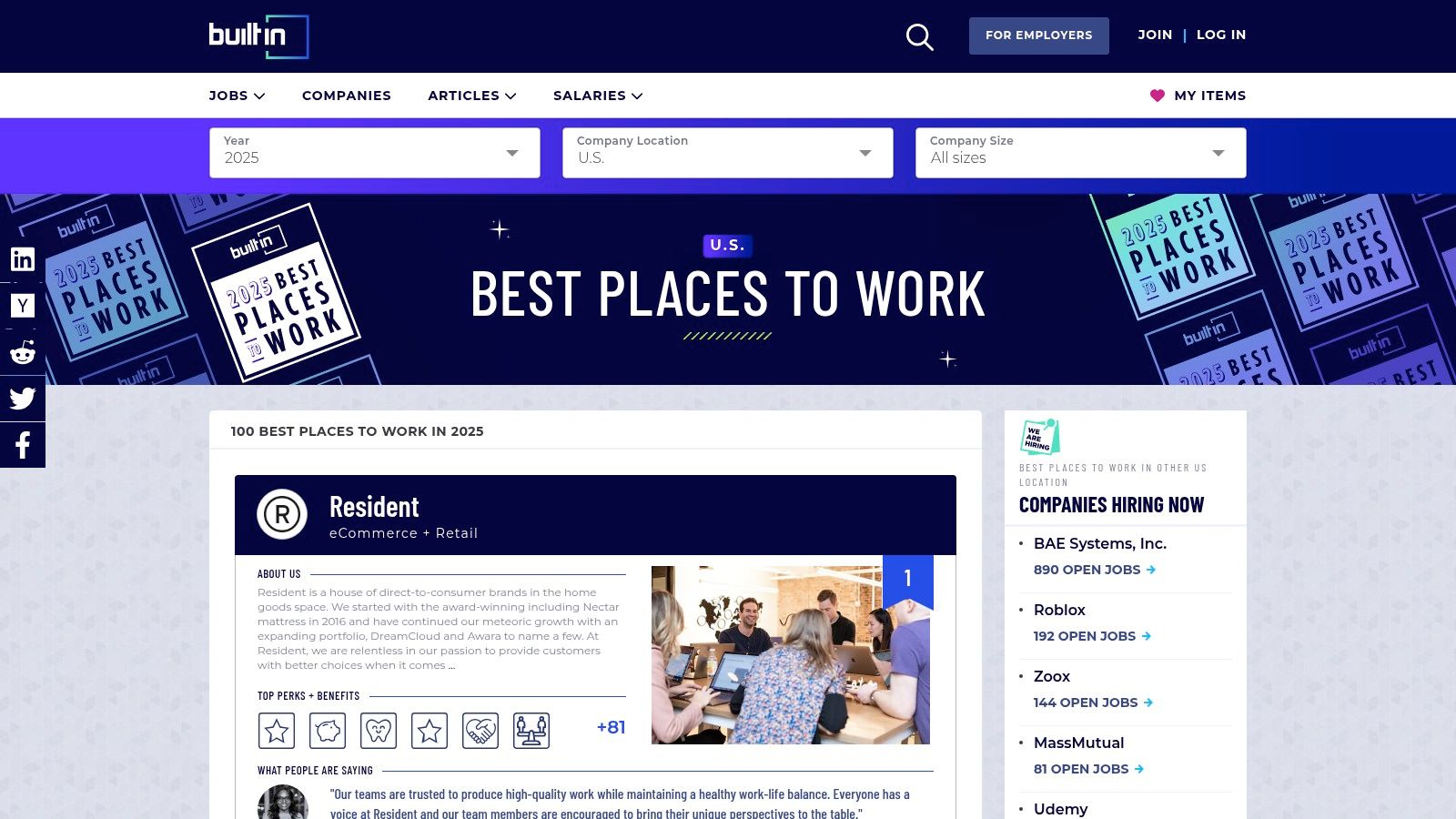
Built In excels at providing context that is directly relevant to a tech career. Its most valuable features are tailored to this audience:
Actionable Tip: Use the "Best Places to Work" remote list to identify companies with a proven commitment to distributed teams. Then, navigate to their profiles and look for specific details on their remote work policies. For instance, do they offer a home office stipend, cover co-working space fees, or organize regular in-person offsites? These practical details reveal how deeply a company supports its remote workforce.
Built In is free to use and does not require an account to browse company lists or job postings. Its strength lies in spotlighting fast-growing startups and mid-size companies that might not appear on larger, more generalized lists. While employer-provided profiles can sometimes feel like marketing material, they provide a solid baseline of information about benefits, culture, and technology. For a balanced view, it's wise to cross-reference insights from Built In with crowdsourced reviews on a platform like Glassdoor. As one of the top job sites for software engineers, it’s an essential tool for targeted job searching within the tech ecosystem.
While other platforms focus heavily on culture and compensation, LinkedIn's annual "Top Companies" list offers a unique and powerful perspective: identifying the best employers for long-term career growth. The list is data-driven, analyzing billions of actions taken by LinkedIn members to evaluate companies based on seven key pillars, including the ability to advance, skills growth, and company stability. This makes it an essential tool for professionals looking beyond their next role to build a sustainable career path.
The list highlights which of the best tech companies to work for are not just popular, but are actively investing in their employees' development and promoting from within. It’s a crucial resource for understanding where you can acquire in-demand skills and gain the experience needed to advance in competitive markets like NYC and SF, or in a remote-first environment.
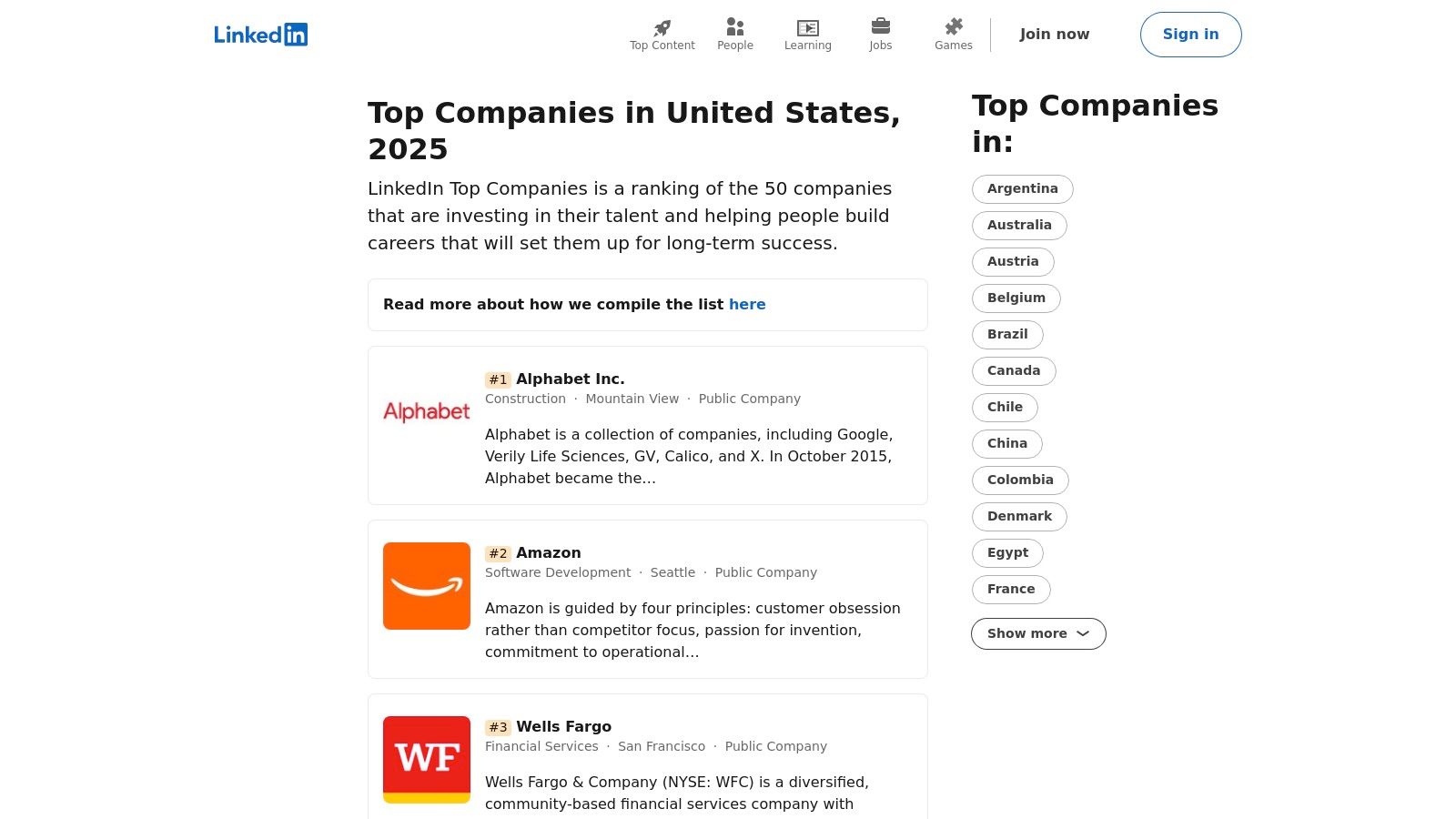
LinkedIn’s strength lies in integrating its rankings directly into its massive professional network and job-seeking ecosystem. Its most impactful features include:
Actionable Tip: Once you identify a target company from the list, use LinkedIn's "People" search filter on that company's page. Filter by your university or previous employers to find "warm" connections. Reaching out with a personalized message like, "Hi [Name], I saw you're a [Your University] alum working at [Company]. I'm exploring roles on the platform team and would love to hear about your experience there for 15 minutes," can dramatically increase your chances of getting a referral.
To leverage the full power of the Top Companies list, you need an active and up-to-date LinkedIn profile. While the list itself is free to view, a Premium subscription can unlock more detailed insights, such as competitive intelligence on applicants and access to LinkedIn Learning courses relevant to a company's most sought-after skills. The platform's primary focus on professional networking and mobility means it complements culture-focused resources by providing a direct line to recruiters and internal contacts, making your job search both smarter and more direct.
While other platforms focus on overall company ratings, Comparably carves out a unique niche by providing granular, category-specific awards and rankings. Instead of one single "best of" list, it surfaces top employers for specific priorities like "Best Career Growth," "Best Work-Life Balance," and "Best CEO," all driven by verified employee ratings. This approach empowers job seekers to find companies that excel in the areas they value most, moving beyond a simple aggregate score.
Comparably's strength lies in its year-round, multifaceted award system, which provides a more current and dynamic view of a company's culture. These awards are syndicated across major media outlets, giving them significant weight. The platform splits its rankings between large and small-to-midsize companies, ensuring that innovative startups and high-growth firms aren't overshadowed by tech giants, making it an excellent resource for finding hidden gems.
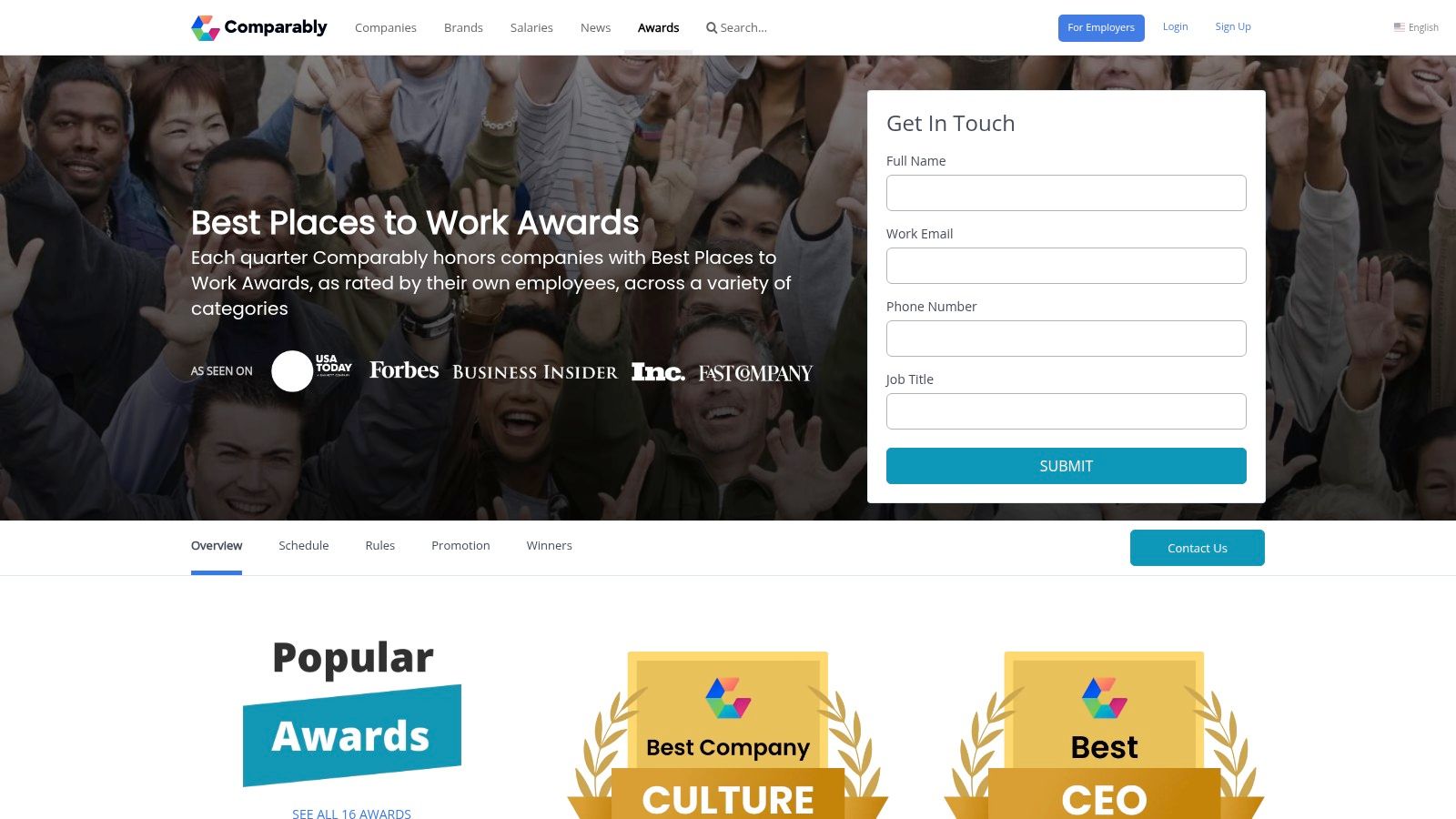
Comparably helps you match your personal career priorities with companies that demonstrably deliver on them. Its most useful features include:
Actionable Tip: Use the "Best Career Growth" and "Best Leadership" lists to identify smaller, high-growth startups. A company that ranks highly in these categories, even if it's not a household name, often signals strong mentorship opportunities and a clear path for advancement. For example, if a 150-person startup appears on the "Best Leadership" list, it's a strong indicator that its executives are accessible and invested in employee development.
Like Glassdoor, accessing the full suite of data on Comparably requires a free account and anonymous contribution of your own workplace data. This helps maintain the richness of its platform. While self-reported data can have inherent biases, the ability to slice the information by department and demographic helps you validate broader trends. Keep in mind that some companies use Comparably's paid employer branding tools, which may influence their public profiles. Always cross-reference your findings with other platforms for a well-rounded view.
While culture and mission are critical, understanding compensation is a non-negotiable part of finding the best tech companies to work for. Levels.fyi has become the industry standard for this, offering a transparent, data-driven look at total compensation packages across hundreds of tech employers. It moves beyond broad salary ranges to provide detailed breakdowns of base pay, stock grants (RSUs), and bonuses, all tied to specific company levels.
The platform’s strength lies in its granular, user-submitted data, which is organized into comprehensive reports like its annual End-of-Year Pay Report. This allows you to see precisely how roles like Senior Software Engineer or Product Manager are compensated at top-paying firms in NYC, SF, and remote settings. It’s an essential tool for evaluating offers, planning negotiations, and understanding your market value.

Levels.fyi empowers candidates to make financially informed career decisions with its unique, compensation-focused toolset. Its most powerful features include:
Actionable Tip: Use the "Compare Offers" tool to directly input multiple job offers. The platform will visualize the total compensation for each over a four-year period, accounting for stock vesting schedules (e.g., a front-loaded vs. an even-split vest). This provides a clear, apples-to-apples view of which offer is truly more lucrative long-term, beyond just the initial base salary.
Most of the core data on Levels.fyi, including company profiles and salary reports, is free to access without an account. However, to contribute data or use certain advanced features like the negotiation service, you may need to sign up. While the self-reported data can sometimes be skewed towards higher-paying FAANG companies and senior-level roles, the platform's focus and large volume of submissions make it the most reliable resource for tech compensation intelligence. It perfectly complements culture-focused sites by providing the hard numbers needed to evaluate a company holistically.
Navigating the landscape of top tech employers can feel overwhelming, but with the right toolkit, you can pinpoint the opportunities that truly align with your career ambitions. This guide has equipped you with a strategic arsenal of seven powerful platforms, from Glassdoor's unfiltered employee reviews to the data-driven compensation insights of Levels.fyi. We've explored how each tool offers a unique lens for evaluating the best tech companies to work for, whether you prioritize culture, compensation, or growth potential.
The key takeaway is that a multi-faceted approach yields the best results. No single platform tells the whole story. By synthesizing information from various sources, you can build a comprehensive picture of a company, moving beyond marketing hype to understand its true inner workings.
Having a list of target companies is a great start, but turning that research into a job offer requires a deliberate, organized strategy. The most successful job seekers treat their search like a project, with clear goals, timelines, and execution plans.
Here’s a practical framework to transition from research to application:
Pro Tip: Set up alerts on platforms like LinkedIn and Built In for your target companies and keywords (e.g., "Senior Product Manager, FinTech"). This ensures you're among the first to know about new roles, giving you a critical timing advantage in a competitive market.
Remember, the effectiveness of these resources depends on how you use them. Your specific needs as a job seeker should dictate which platform you lean on most heavily at different stages of your search.
Ultimately, identifying the best tech companies to work for is a deeply personal journey. What defines a "best place" for one person may not for another. Use these tools not just to find highly-rated employers, but to find the right employer for your unique skills, values, and career trajectory. Your research has laid the foundation; now it's time to build your future.
Ready to skip the endless applications and connect directly with hiring managers at the companies you've just researched? Create your free profile on Underdog.io in under 60 seconds. We put you in front of hundreds of vetted tech companies in NYC, SF, and remote roles, so they apply to you.

