The tech job market is more competitive than ever, and a winning strategy goes beyond spamming applications. Sending your resume into the void of massive job boards often leads to silence, frustration, and missed opportunities. The key is knowing which platforms align with your specific career goals, whether you're targeting a high-growth startup, a remote-first company, or a FAANG-level enterprise. This guide cuts through the noise to help you find the best websites for tech jobs that will actually get you noticed.
We'll break down the top 12 platforms, providing actionable insights into how to use each one effectively. Forget generic feature lists; this is a comprehensive resource focused on practical application. You'll learn which sites are best for specific roles (like software engineering or product management), how to optimize your profile to stand out, and how to leverage curated marketplaces to have companies apply to you. Each entry includes a clear "Best For" section, pros and cons, screenshots, and direct links to get you started immediately.
Finding the right platform is the first step, but a successful job search involves acing the interview process. Strong communication is critical, especially in technical interviews where clarity is paramount. Beyond identifying the right job boards, enhancing your communication skills can be a significant advantage. Consider exploring resources on accent reduction specifically for software engineers to boost your confidence and ensure your expertise shines through. This guide will equip you with the tools to navigate your job search strategically, from initial application to final offer.
Underdog.io flips the traditional job search model on its head, establishing itself as a premier destination for tech professionals targeting high-growth startups. Instead of endlessly applying to individual roles, you submit a single, streamlined application. If accepted, your anonymous profile is showcased to a vetted pool of innovative companies, primarily in NYC, San Francisco, and remote U.S. markets. This transforms the dynamic from chasing opportunities to being sought after by founders and hiring managers.
What truly sets Underdog.io apart is its relentless commitment to quality over quantity, a core principle that benefits both candidates and employers. This is one of the best websites for tech jobs because it actively curates its marketplace, creating a high-signal environment where meaningful connections happen.
The platform's "human-powered matching" is its defining feature. Real recruiters, not just algorithms, review profiles and facilitate personalized introductions. This approach minimizes the noise and resume "black holes" common on larger job boards, ensuring that the 1-3 opportunities you receive per month are highly relevant to your skills and career goals.
Because approximately 85% of its talent pool consists of passive candidates who are currently employed, Underdog.io gives employers access to experienced professionals not found on other platforms. For job seekers, this means less competition and a confidential way to explore the market without publicly signaling your intent to leave a current role.
Best For: Networking your way into a role at companies of all sizes, from FAANG to early-stage startups.
LinkedIn Jobs transforms the job search from a passive application process into an active networking campaign. Its primary advantage isn't just the sheer volume of listings; it’s the unparalleled integration with its professional network. You can see who works at a company, identify alumni from your university, and directly message hiring managers or recruiters, making it one of the best websites for tech jobs if you prefer a proactive approach.
The platform’s "Easy Apply" feature streamlines applications, but the real power lies in using the network to get a warm introduction or gather insider information before an interview. While the basic job search is free, LinkedIn Premium (starting at $29.99/month) unlocks features like InMail credits for contacting anyone, insights on other applicants, and enhanced AI job recommendations.
Website: https://www.linkedin.com/jobs/
Best For: Casting the widest possible net with a massive volume of aggregated job listings across all tech sectors and locations.
As one of the world's largest job aggregators, Indeed functions as the Google of job searching. It scrapes listings from thousands of company career pages, job boards, and recruitment agencies, creating a comprehensive, if sometimes overwhelming, database. Its sheer scale makes it an essential tool for baseline research and ensuring you don't miss opportunities, particularly for roles in IT support, data analysis, and software development outside major tech hubs.
Indeed's strength is its unparalleled volume and straightforward search functionality. You can quickly filter by title, location, salary, and experience level, and set up daily email alerts to stay on top of new postings. While the platform is free for job seekers, its open nature means you'll need to sift through a higher volume of listings, including potential duplicates or lower-quality posts, to find the gems.

"Data Scientist" AND (Python OR R) NOT Manager to find individual contributor roles with specific skills.Website: https://www.indeed.com
Best For: Vetting company culture and salary expectations before you even apply, using real employee reviews and data.
Glassdoor’s unique value proposition is its powerful combination of job listings with an enormous database of anonymous company insights. It goes beyond a simple job board by providing a transparent look inside a company’s culture, work-life balance, leadership, and compensation structures, all submitted by current and former employees. This makes it one of the best websites for tech jobs when you want to avoid toxic environments and ensure you’re being paid fairly.
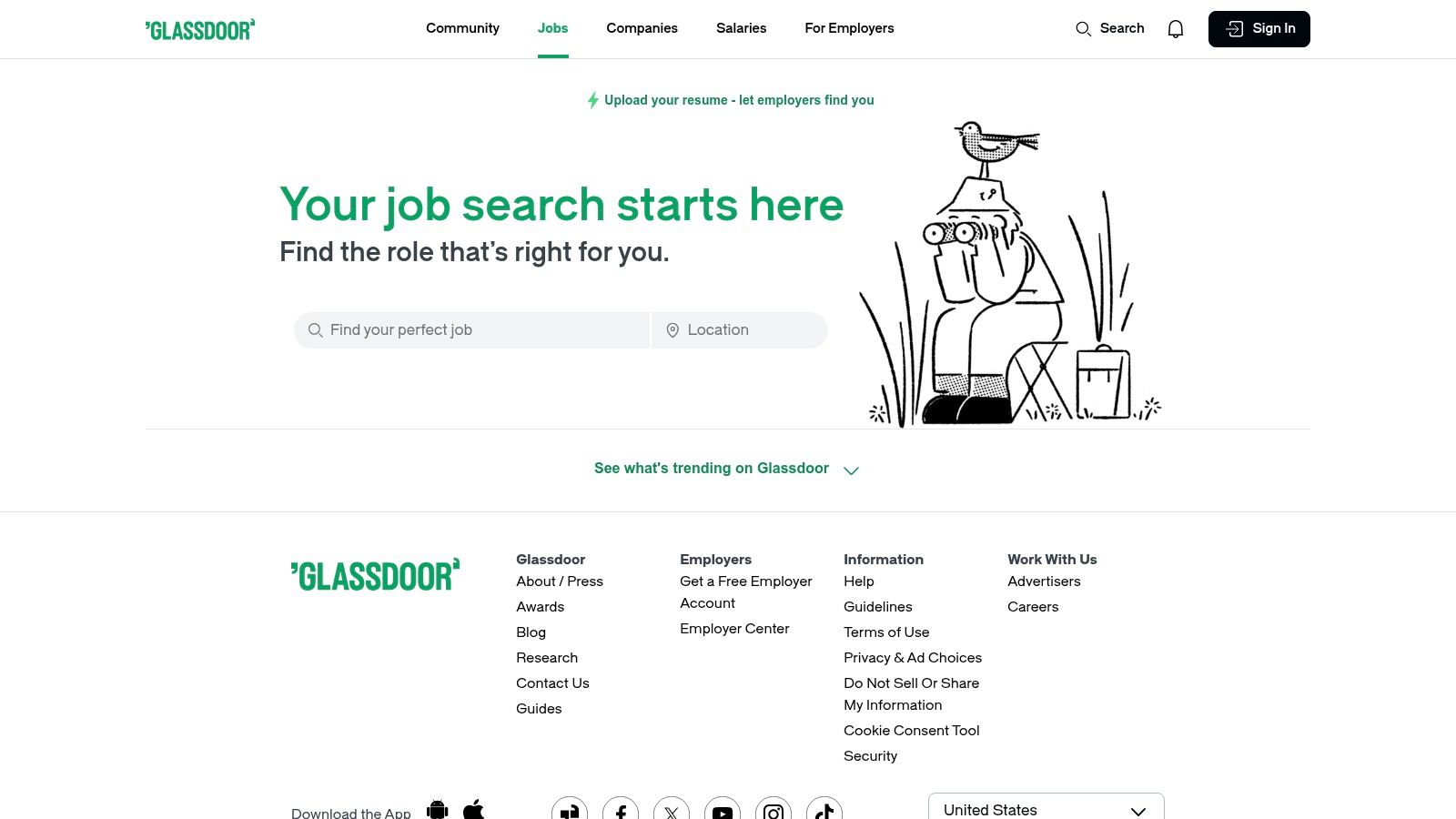
While the job search functionality is robust, the platform’s real strength is in the pre-application research phase. You can read detailed interview question reports from other candidates who have been through the process and see specific salary data for your target role at that exact company. This insider information gives you a significant advantage in both your application and negotiation. Access to most of this data is free, though it often requires you to contribute your own anonymous review or salary information.
Website: https://www.glassdoor.com/Job/
Best For: Experienced tech professionals seeking specialized roles in areas like software, data, cloud, security, and infrastructure, particularly within the U.S.
Dice has been a staple in the tech recruiting world for decades, cementing its reputation as a go-to job board for specialized technical roles. Its longevity and focus mean that the platform is heavily populated with recruiters and hiring managers who are specifically looking for candidates with deep expertise in fields like cybersecurity, cloud computing, and enterprise software development. This makes it one of the best websites for tech jobs if you're an established professional looking to filter out the noise of generalist job boards.

Unlike broader platforms, Dice attracts employers who are willing to pay a premium (postings start around $399) to reach a targeted audience of technologists. For job seekers, this often translates into higher-quality, more relevant listings. However, its popularity with recruiters means candidates should be prepared to vet incoming messages carefully, as the volume can sometimes feel overwhelming.
Website: https://www.dice.com
Best For: Discovering tech roles within specific U.S. innovation hubs like NYC, SF, and Chicago, or finding high-quality remote opportunities.
Built In is more than just a job board; it's a community-driven platform that provides a localized lens on the tech industry. Its strength lies in its focus on major U.S. tech hubs, offering rich company profiles, local tech news, and curated job listings that cut through the noise of massive aggregators. This makes it one of the best websites for tech jobs if you're targeting a specific city or want deep insights into a company's culture and benefits before you apply.
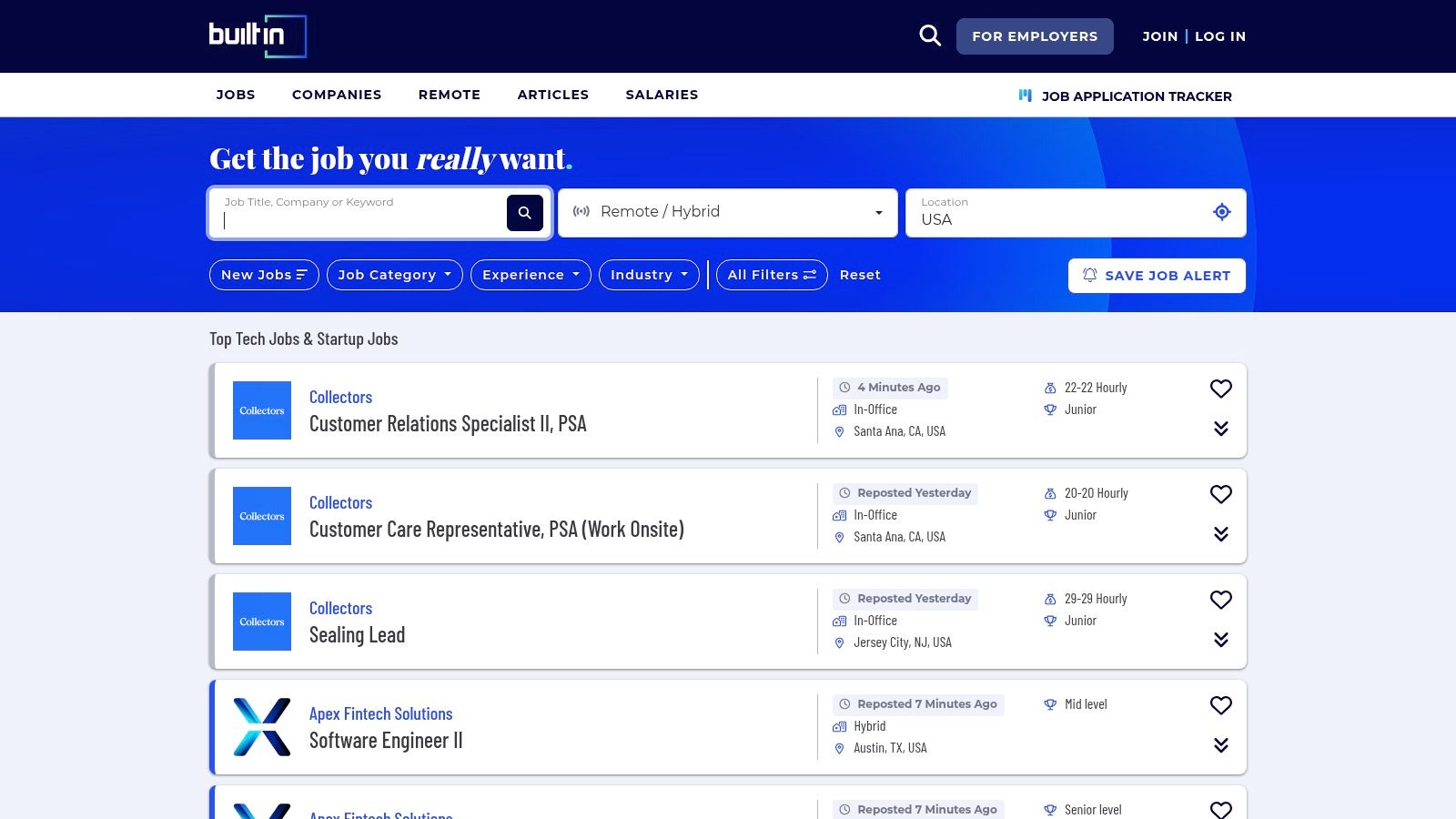
The platform is completely free for job seekers and provides valuable resources, including salary data and editorial content on tech trends. While it has fewer total listings than giants like LinkedIn, the quality and relevance for tech roles are consistently high, particularly for software, data, product, and design positions at startups and established tech companies. Its tech-first curation ensures you spend less time sifting through irrelevant positions.
builtin.com/austin portal to see a curated list of top local tech companies, recent funding rounds, and available jobs. This local context is invaluable for targeting your search.Website: https://builtin.com/jobs
Best For: Directly connecting with founders and hiring managers at high-growth startups and venture-backed companies.
Wellfound, originally AngelList Talent, is the undisputed leader for startup-centric roles. Its core strength lies in transparency and direct access. Unlike traditional job boards, nearly every listing on Wellfound includes upfront salary and equity ranges, cutting through the noise and allowing you to focus only on opportunities that meet your financial expectations. The platform is designed for speed, letting you apply to roles with a single click using a comprehensive profile that showcases your skills, experience, and preferences.
The platform functions as a specialized marketplace, connecting talent directly with decision-makers, often the founders themselves. This direct line of communication is invaluable for getting a genuine feel for a company's culture and vision. While it's one of the best websites for tech jobs in the startup ecosystem, its focus means you’ll find fewer listings from large, established enterprise companies. The environment is also highly competitive, making personalized outreach crucial.
Website: https://wellfound.com
Best For: Applying to a high volume of tech jobs quickly, especially at mid-market companies, with a mobile-first approach.
ZipRecruiter functions as a massive job aggregation engine, using AI to match candidate resumes with a vast pool of listings from across the web. Its core strength lies in its speed and simplicity. The platform’s "1-Tap Apply" feature, combined with its powerful mobile app, makes it incredibly easy to submit applications on the go, making it a useful supplement to more targeted job search strategies.
The platform provides immediate feedback, sending notifications when an employer views your application, which offers a valuable glimpse into your application's visibility. While it hosts a wide range of tech roles, its broad, less-curated nature means that the quality and relevance of job matches can vary. It’s best used as a high-volume tool to ensure broad coverage in your search rather than a platform for discovering highly-vetted, niche opportunities. The service is free for job seekers.
Website: https://www.ziprecruiter.com
Best For: Vetted, high-quality remote, hybrid, and flexible tech jobs without the noise of traditional job boards.
FlexJobs carves out a niche by focusing exclusively on flexible work arrangements, a major draw for tech professionals seeking better work-life balance. Its key differentiator is that every single listing is hand-screened by a human to filter out scams, ads, and commission-only roles. This quality control makes it one of the best websites for tech jobs if you're tired of sifting through irrelevant or dubious postings on massive aggregators.
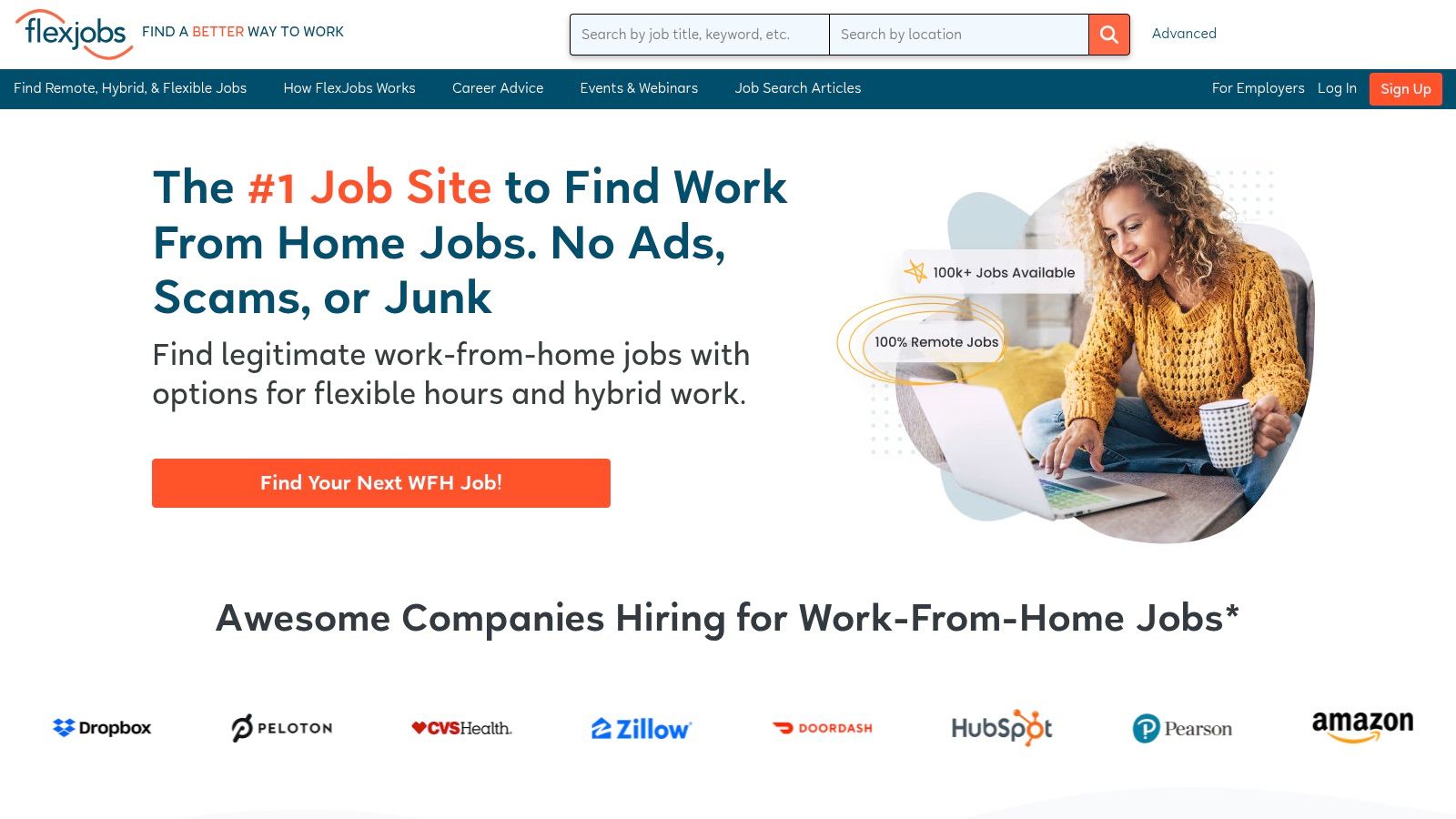
While the platform has a smaller total volume of listings compared to giants like LinkedIn, the signal-to-noise ratio is significantly higher for its target roles. Access to the full job details and application links requires a subscription (starting around $25/month, with frequent discounts). This paywall funds the vetting process and provides access to career coaching, resume reviews, and skills tests.
Website: https://www.flexjobs.com
Best For: Tech professionals prioritizing fully remote roles, especially in software development, DevOps, and design.
Remote OK is one of the most established and trusted job boards dedicated exclusively to remote work. Its strength lies in its simplicity and laser focus on a single niche. The platform cuts through the noise of hybrid or location-flexible roles, presenting a clear, frequently updated feed of opportunities that are truly location-independent. This makes it one of the best websites for tech jobs for candidates who have committed to a fully remote career.
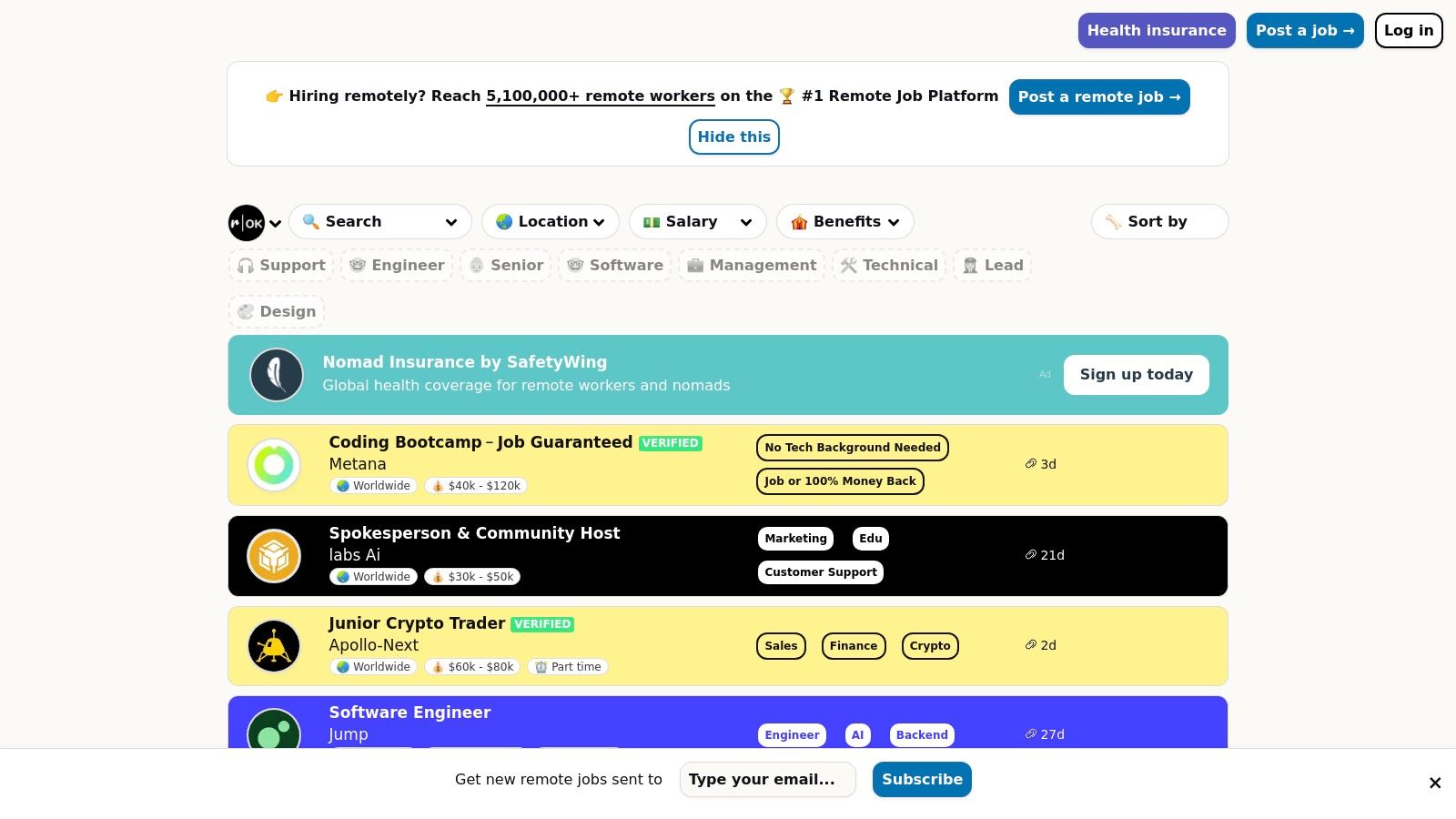
The interface is straightforward, with powerful tags for filtering by specialty (e.g., "React," "Go," "Senior") and even by region-specific eligibility (e.g., "USA Only"). A significant number of listings include salary ranges upfront, providing immediate transparency. While the board is open and employer quality can vary, Remote OK provides helpful anti-scam reminders on its posts to protect job seekers.
Website: https://remoteok.com
Best For: Experienced tech professionals who want to filter job opportunities based on total compensation and level.
Levels.fyi Jobs flips the traditional job search on its head by leading with the one thing most platforms hide: compensation. Built on the foundation of its renowned verified salary data, this platform allows you to filter roles not just by title or location, but by target total compensation. This makes it one of the best websites for tech jobs if you’re a mid-to-senior level professional looking to maximize your earning potential and avoid wasting time on underpaid opportunities.
The platform is completely free for job seekers and integrates seamlessly with its salary, benefits, and career ladder insights. Instead of applying blindly, you can research a company’s compensation bands for your target level, then find roles that match those expectations. Its laser focus on tech roles means fewer irrelevant listings, although the inventory is smaller than on massive aggregators like LinkedIn or Indeed.
Website: https://www.levels.fyi/jobs/
Best For: Evaluating company culture and values before applying to a tech role, especially at mid-to-large-sized companies.
The Muse approaches the job search with a culture-first mindset, positioning itself as a platform for finding a company, not just a job. Its standout feature is the rich, behind-the-scenes company profiles that go far beyond a standard job description. These profiles often include office photos, employee testimonials, and detailed rundowns of benefits and company values, making it an invaluable tool for tech professionals who prioritize a strong culture fit.

While its job board is smaller than massive aggregators like Indeed, the listings are from companies that have invested in showcasing their employer brand. This curated approach means you spend less time sifting through generic postings and more time exploring opportunities that align with your professional and personal values. For anyone who has ever joined a team with a mismatched culture, The Muse is one of the best websites for tech jobs to avoid making the same mistake twice. The platform is free for job seekers.
Website: https://www.themuse.com/
Navigating the landscape of the best websites for tech jobs can feel overwhelming, but the right strategy isn't about being everywhere at once. It's about being in the right places, strategically. As we've explored, the digital job market is not a monolith; it's a diverse ecosystem of platforms, each serving a distinct purpose and audience. Your goal is to build a personalized, multi-channel toolkit that aligns with your specific career ambitions, whether you're a software engineer targeting high-growth startups or a product manager exploring remote opportunities.
Think of your job search as a campaign. The large-scale platforms like LinkedIn and Indeed are your broad-reach channels. They are essential for market research, understanding compensation trends, and building a professional network. However, relying on them exclusively is like shouting into a void; your application can easily get lost among hundreds, if not thousands, of others. This is where a more focused approach becomes critical.
The most effective job seekers don't just apply; they strategize. To truly optimize your search, you need to create a "job search stack" tailored to your needs. This involves combining different types of platforms to cover all your bases, from discovery to application to negotiation.
Here’s a practical framework for building your stack based on your primary goal:
The key takeaway is that a successful tech job search in today's competitive market requires a deliberate, tiered approach. Don't spread yourself thin by applying everywhere. Instead, allocate your time and energy wisely. Use the big platforms for research and discovery, the data platforms for due diligence, and the curated marketplaces for high-quality, targeted applications. By combining these tools, you transform your job search from a passive, frustrating numbers game into an active, strategic campaign that puts you in control and connects you with the opportunities that will truly advance your career.
Ready to skip the endless applications and connect directly with innovative tech companies actively hiring for your skillset? Join the curated talent marketplace at Underdog.io. We match top tech talent with ambitious startups and leading tech firms, ensuring every introduction is a high-quality, relevant opportunity. Create your free profile on Underdog.io and let the best tech jobs find you.